
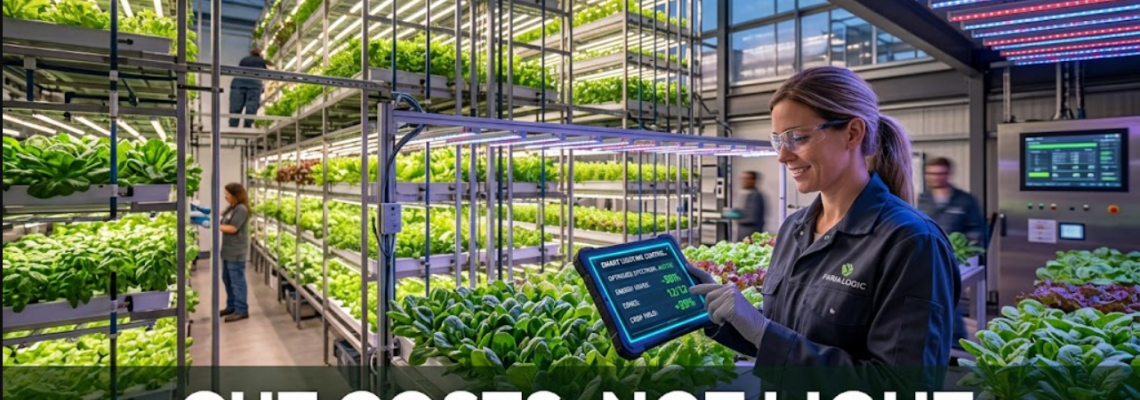
As indoor farming and Controlled Environment Agriculture (CEA) continue to grow, energy consumption remains a major concern. Lighting systems, particularly in indoor and vertical farming setups, consume a large share of electricity. Since crops rely heavily on artificial light for photosynthesis, these systems often run for long hours, making energy costs one of the biggest operational expenses for growers.
However, modern farms are demonstrating that cutting costs doesn’t require cutting back on light. Instead, they are adopting smarter approaches to energy management. With the advancement of smart lighting control systems, farmers can now optimize how and when light is used, ensuring plants receive the right amount of light without wasting energy.
These intelligent systems use automation, sensors, and data-driven insights to adjust lighting based on plant needs and environmental conditions. As a result, farms can maintain optimal growth conditions while significantly reducing electricity usage.
This shift is helping indoor agriculture become more efficient, cost-effective, and sustainable. By using light more intelligently rather than simply reducing it, modern farms are successfully balancing productivity with energy savings.
Why Lighting Is a Major Cost Factor
In traditional farming, sunlight is free. But in indoor environments, artificial lighting replaces the sun entirely. This makes lighting systems one of the most energy-intensive components of indoor agriculture.
Grow lights must run for long hours to support photosynthesis, often 12–18 hours per day depending on the crop. Combined with cooling systems needed to manage heat, this creates high energy demand.
This is where smart lighting control is making a transformative impact.
What Is Smart Lighting Control?
Smart lighting control refers to the use of automation, sensors, and intelligent software to manage how and when lights operate. Instead of running at full intensity all the time, these systems adjust lighting dynamically based on:
Plant growth stages
Natural light availability
Environmental conditions
Time of day and photoperiod
By delivering light only when and where it’s needed, smart systems eliminate unnecessary energy use.
The Role of LED Technology
At the heart of smart lighting systems are LED grow lights, which are far more efficient than traditional lighting technologies like High-Pressure Sodium (HPS) and fluorescent systems.
LEDs can consume up to 50–70% less energy than conventional lighting
They produce significantly less heat, reducing cooling costs
They deliver targeted light wavelengths, minimizing wasted energy
Modern LED systems also achieve higher photon efficiency, meaning more usable light is produced per unit of electricity.
How Smart Lighting Reduces Energy Bills
1. Adaptive Light Intensity
Smart systems adjust light intensity based on plant needs. For example:
Seedlings receive lower light intensity
Mature plants receive higher intensity
This prevents over-lighting and reduces unnecessary power usage. In fact, optimized lighting can improve efficiency while boosting growth rates.
2. Daylight Integration
In greenhouses or hybrid systems, sensors detect natural sunlight and automatically dim artificial lights when sufficient daylight is available.
This alone can reduce daily energy consumption by up to 40%, as lights are only used when needed.
3. Smart Scheduling & Photoperiod Control
Instead of fixed timers, smart systems use dynamic schedules that mimic natural sunrise and sunset cycles.
Lights gradually increase and decrease intensity
Lighting duration is optimized for each crop
Energy use is aligned with plant biology
Advanced optimization algorithms can even reduce energy costs by 40–50% while maintaining or improving plant growth.
4. Reduced Cooling Requirements
Traditional lighting systems generate significant heat, increasing the need for air conditioning and ventilation.
LED-based smart lighting produces 60–70% less heat, significantly lowering cooling energy consumption.
This creates a double benefit:
Lower lighting energy use
Lower HVAC energy costs
5. Precision Spectrum Control
LED systems allow growers to deliver only the light wavelengths plants actually need for photosynthesis.
This eliminates wasted energy from unnecessary light output and improves overall efficiency.
6. Real-Time Monitoring and Automation
Smart lighting systems use IoT sensors and cloud-based platforms to monitor conditions in real time.
Adjust lighting automatically
Track energy usage
Optimize performance continuously
These systems ensure that energy is never wasted due to human error or outdated schedules.
Real Cost Savings for Modern Farms
The financial impact of smart lighting control is substantial.
Switching from HPS to LED can save hundreds of dollars per fixture annually
Reduced cooling costs add even more savings
Payback periods for LED upgrades can be as short as 2–3 years
In large-scale farms, these savings scale dramatically, making smart lighting one of the most impactful investments.
Boosting Efficiency Without Sacrificing Yield
A common concern among growers is whether reducing energy use will impact crop production. Smart lighting proves that the opposite is true.
By optimizing light delivery:
Photosynthesis becomes more efficient
Growth cycles can accelerate
Crop quality improves
Some systems even report up to 25% improvement in photosynthetic efficiency through optimized lighting strategies.
This means farms can grow more while spending less.
Sustainability Benefits
Energy efficiency is not just about cost—it’s also about sustainability.
Smart lighting systems help farms:
Reduce carbon emissions
Lower overall energy consumption
Minimize environmental impact
As agriculture moves toward more sustainable practices, smart lighting plays a critical role in achieving these goals.
Integration with Smart Farming Ecosystems
Modern farms are becoming fully digital ecosystems, integrating:
IoT sensors
AI-driven analytics
Automated irrigation systems
Climate control technologies
Smart lighting fits seamlessly into this ecosystem, working alongside other systems to optimize overall farm performance.
For example:
Lighting adjusts based on temperature and humidity
Systems coordinate with irrigation schedules
AI predicts optimal lighting strategies
This level of integration maximizes efficiency across the entire operation.
Challenges to Consider
While the benefits are clear, there are some challenges:
Initial Investment
Smart lighting systems and LED upgrades require upfront capital.
Technical Expertise
Growers may need training to fully utilize advanced features.
System Integration
Retrofitting older farms can require adjustments to existing infrastructure.
However, these challenges are becoming less significant as technology becomes more accessible and user-friendly.
The Future of Smart Lighting in Agriculture
The next phase of innovation in smart lighting includes:
AI-driven predictive lighting systems
Dynamic spectrum adjustments in real time
Integration with renewable energy sources
Fully autonomous farm management systems
As these technologies evolve, energy efficiency will continue to improve, making indoor farming more scalable and cost-effective.
Conclusion
“Cut costs, not light” is no longer just an idea—it’s a reality in modern agriculture. Smart lighting control is proving that farms can significantly reduce energy bills without compromising plant growth or productivity.
By combining LED technology with automation, sensors, and intelligent scheduling, growers can:
Lower electricity costs
Improve crop yield and quality
Reduce environmental impact
Increase overall operational efficiency
As energy prices rise and sustainability becomes a priority, smart lighting control is quickly becoming an essential tool for the future of farming.
In the world of modern agriculture, the smartest farms aren’t using less light—they’re using light more intelligently.
Leave a Comment