
Introduction
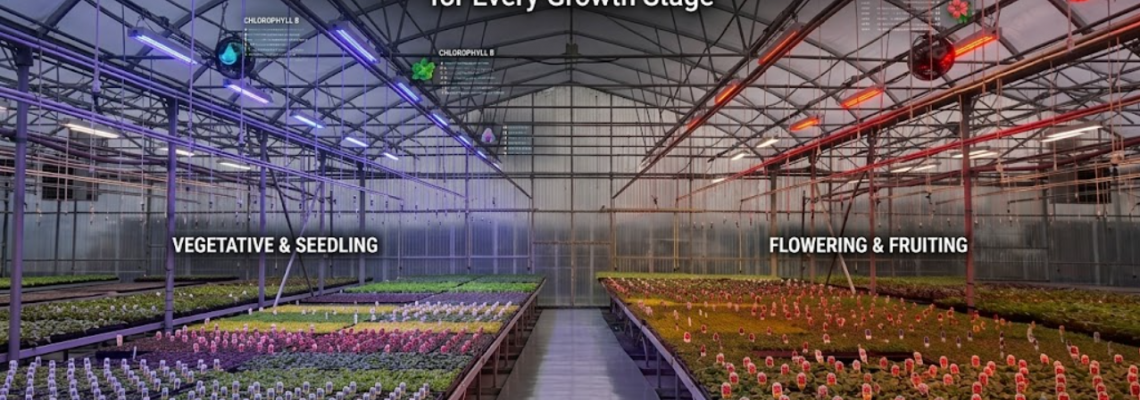
As indoor farming, vertical agriculture, and greenhouse cultivation continue to evolve, lighting has become one of the most critical factors influencing plant growth and productivity. While traditional grow lights provide a fixed light spectrum, modern Tunable Spectrum Technology offers growers the ability to dynamically adjust light wavelengths according to each stage of a plant's life cycle. This level of precision allows plants to receive the most effective light composition—from blue-rich light for early growth to red-dominant light for flowering and fruiting.
Plants do not require the same type of light throughout their development. Each growth stage has unique physiological needs, and providing the right spectrum at the right time can significantly improve photosynthesis, nutrient absorption, plant structure, crop quality, and overall yield. Tunable spectrum LED lighting enables growers to create customized lighting recipes that adapt to these changing requirements while reducing energy consumption and supporting sustainable farming practices.
This guide explores how tunable spectrum technology works, the role of different light wavelengths, and how dynamic lighting helps maximize plant performance from seed germination to harvest.
Understanding Tunable Spectrum Technology
Tunable Spectrum Technology refers to advanced LED grow lighting systems that allow users to adjust the intensity and combination of different light wavelengths. Unlike fixed-spectrum fixtures, these systems provide programmable control over blue, red, green, white, and far-red light, enabling growers to optimize lighting conditions for specific crops and growth stages.
Using digital controllers or smart farm management software, growers can modify light recipes automatically throughout the crop cycle. This adaptability supports healthier plants, higher productivity, and more efficient use of electricity.
Why Light Spectrum Matters in Plant Growth
Plants rely on light as their primary energy source for photosynthesis. However, not all wavelengths affect plants in the same way. Different colors of light trigger distinct biological processes that influence growth, flowering, and fruit development.
Blue Light (400–500 nm)
Blue light is essential during the early stages of plant growth. It promotes:
Strong root development
Compact plant structure
Healthy leaf formation
Chlorophyll production
Increased nutrient density
Blue-rich lighting is ideal for seedlings, herbs, leafy greens, and vegetative growth because it encourages sturdy, healthy plants.
Green Light (500–600 nm)
Although less absorbed than blue and red light, green light penetrates deeper into dense plant canopies.
Its benefits include:
Better light distribution
Improved photosynthesis in lower leaves
More uniform plant growth
Enhanced canopy development
Red Light (600–700 nm)
Red light is one of the most efficient wavelengths for photosynthesis and biomass production.
It helps:
Stimulate flowering
Increase fruit production
Improve plant height
Accelerate overall growth
As plants mature, increasing the proportion of red light supports reproductive development and larger harvests.
Far-Red Light (700–750 nm)
Far-red light influences plant morphology and flowering responses.
Benefits include:
Earlier flowering
Larger leaves
Improved canopy expansion
Faster production cycles
White Light
White LEDs provide a broad spectrum that supports balanced plant development while improving visibility for growers during crop monitoring and maintenance.
Adapting Light for Every Growth Stage
One of the greatest advantages of tunable spectrum technology is its ability to match lighting conditions to each phase of plant development.
Stage 1: Seed Germination
During germination, plants require moderate light intensity and a balanced spectrum to encourage healthy root emergence.
Recommended lighting characteristics:
Higher blue light content
Gentle light intensity
Stable photoperiod
Benefits:
Faster germination
Uniform seedling emergence
Strong initial root systems
Stage 2: Seedling Development
Young seedlings need blue-rich light to establish strong stems and leaves.
Dynamic lighting promotes:
Compact growth
Reduced stretching
Increased chlorophyll production
Improved resilience
Healthy seedlings provide a strong foundation for later growth stages.
Stage 3: Vegetative Growth
As plants produce more foliage, they require a balanced combination of blue, green, and white light.
This spectrum supports:
Leaf expansion
Stem strength
Dense canopy formation
Efficient photosynthesis
Maintaining adequate blue light during this phase prevents excessive elongation while encouraging vigorous vegetative growth.
Stage 4: Flower Initiation
When plants begin transitioning to reproduction, lighting shifts toward increased red wavelengths.
Benefits include:
Faster flowering
More flower sites
Improved reproductive development
Enhanced photosynthetic efficiency
Far-red light can also be introduced to stimulate flowering in specific crop species.
Stage 5: Fruiting and Harvest
During fruit production, plants benefit from red-dominant lighting with carefully controlled far-red supplementation.
Dynamic spectrum lighting helps:
Increase fruit size
Improve sweetness
Enhance color
Boost nutritional value
Produce consistent harvests
Customized light recipes maximize both crop quantity and quality.
How Tunable Spectrum LED Systems Work
Modern horticultural LED fixtures contain multiple independently controlled LED channels.
Typical channels include:
Blue LEDs
Deep blue LEDs
Green LEDs
White LEDs
Red LEDs
Deep red LEDs
Far-red LEDs
Smart controllers allow growers to:
Adjust spectrum composition
Modify light intensity
Schedule photoperiods
Automate lighting transitions
Many systems integrate with environmental sensors and cloud-based software, enabling automated adjustments based on crop needs and environmental conditions.
Key Benefits of Dynamic Spectrum Lighting
1. Optimized Photosynthesis
Providing the correct wavelengths at each growth stage increases photosynthetic efficiency and energy conversion.
Plants produce more biomass using less energy.
2. Improved Crop Quality
Customized lighting enhances:
Leaf color
Flavor
Texture
Nutritional content
Essential oil concentration
This results in higher-value produce for commercial growers.
3. Increased Yields
By matching light to plant requirements, growers can achieve:
Larger plants
Higher fruit counts
Better flower production
Greater harvest consistency
4. Faster Crop Cycles
Optimized lighting accelerates plant development, allowing more production cycles throughout the year.
This increases annual revenue without expanding growing space.
5. Better Energy Efficiency
Instead of operating all LED channels continuously, tunable systems activate only the wavelengths needed at each stage.
Advantages include:
Lower electricity costs
Reduced heat output
Longer fixture lifespan
Improved return on investment
6. Greater Crop Flexibility
One programmable lighting system can support multiple crop types by simply adjusting spectral settings.
Common applications include:
Lettuce
Tomatoes
Cucumbers
Strawberries
Basil
Spinach
Microgreens
Ornamental flowers
Applications Across Modern Agriculture
Indoor Farming
Indoor farms rely entirely on artificial lighting, making tunable spectrum technology essential for maximizing productivity and maintaining consistent crop quality year-round.
Vertical Farming
Stacked growing systems benefit from precise lighting control that improves space utilization and increases production per square meter.
Greenhouse Cultivation
Supplemental tunable lighting compensates for seasonal variations in natural sunlight, ensuring stable crop performance regardless of weather conditions.
Hydroponic Systems
When combined with nutrient-rich water delivery, programmable lighting creates highly efficient growing environments for vegetables, herbs, and leafy greens.
Research and Development
Agricultural scientists use tunable lighting to study plant genetics, stress responses, nutrient optimization, and crop breeding under controlled conditions.
Integration with Smart Agriculture
The future of horticultural lighting lies in intelligent automation. Tunable spectrum LED systems integrate with advanced technologies such as:
Internet of Things (IoT)
Sensors continuously monitor environmental conditions including temperature, humidity, CO₂ levels, and light intensity.
Lighting automatically adjusts based on real-time data.
Artificial Intelligence (AI)
AI analyzes crop performance and recommends optimized lighting schedules to improve yields and reduce resource consumption.
Cloud-Based Monitoring
Growers can remotely monitor and control lighting systems through smartphones or computers, receiving alerts and performance reports from anywhere.
Automated Climate Control
Lighting works seamlessly with irrigation, ventilation, nutrient dosing, and HVAC systems to maintain ideal growing conditions.
Sustainability Advantages
Tunable spectrum technology supports environmentally responsible farming by:
Reducing electricity consumption
Lowering greenhouse gas emissions
Extending LED fixture lifespan
Improving water-use efficiency
Minimizing fertilizer waste
Reducing crop losses through healthier plant growth
These benefits contribute to more sustainable food production while lowering operational costs.
Best Practices for Using Tunable Spectrum Lighting
To maximize the benefits of dynamic lighting:
Tailor light recipes to each crop species.
Adjust spectrum as plants transition through growth stages.
Monitor plant responses regularly.
Integrate lighting with environmental controls.
Use automated scheduling for consistency.
Clean fixtures periodically to maintain optimal light output.
Following these practices helps ensure consistent crop performance and efficient energy use.
Future Trends in Tunable Spectrum Technology
As smart agriculture continues to advance, tunable spectrum lighting will become even more intelligent.
Emerging innovations include:
AI-powered real-time spectrum optimization
Machine learning for adaptive lighting strategies
Computer vision systems that detect plant stress
Predictive crop growth analytics
Digital twin technology for virtual crop modeling
Integration with robotic harvesting and automation
These advancements will enable growers to produce more food with fewer resources while maintaining exceptional quality and sustainability.
Conclusion
Tunable Spectrum Technology is transforming modern horticulture by enabling growers to deliver the right light at the right time—from blue-rich lighting for seedlings to red-dominant spectra for flowering and fruiting. This dynamic approach aligns lighting with the natural needs of plants throughout every growth stage, resulting in faster development, healthier crops, improved quality, higher yields, and greater energy efficiency.
As indoor farming, vertical agriculture, and greenhouse production continue to expand, programmable LED lighting will remain a cornerstone of smart agriculture. Combined with AI, IoT, automation, and data-driven crop management, tunable spectrum technology empowers growers to optimize every stage of cultivation while reducing costs and environmental impact.
For commercial producers, research facilities, and controlled-environment growers, adopting tunable spectrum LED lighting is a forward-looking investment that enhances productivity, supports sustainability, and prepares farming operations for the future of precision agriculture.
65 Comment(s)
References:
Dakota sioux casino gladjobs.com
Für das mobile Spiel können Sie entweder eine eigene Echtgeld App nutzen oder per Instant Play mit Handy und Tablet direkt im Browser zocken. Du hast 7 Tage Zeit, um die kompletten Umsatzbedingungen zu erfüllen und die gesamte Prämie zu erhalten. Wenn du auf diese Links klickst und dich registrierst oder Geld einzahlst, erhalten wir möglicherweise eine Provision – für dich entstehen dabei keine zusätzlichen Kosten. Nur wenn du regelmäßig spielst und Push-Infos nutzen möchtest, lohnt sich eine zusätzliche Casino App wirklich.
References:
Diceland casino https://jobschoose.com
I always check for sneaky terms like steep wagering requirements that can ruin a good
deal. My reviews of online PayID casinos start with real money testing.
Years of testing online casinos have taught me that
what matters is how a casino actually runs
- not what’s in their ads.
It's amazing to see how plants require such a precise mix of wavelengths throughout their life cycle, from seed germination to harvest. Mầm non ban mai cầu giấy https://mamnon.com.vn/truong/mam-non-ban-mai-quan-cau-giay , the article beautifully explains why blue-rich light in the early days helps plants establish strong foundations and red-dominant light towards flowering provides optimal conditions for fruit production. morphology precision
References:
Casino san diego https://circle.forthetrail.com/
References:
Ameristar casino st louis https://forum.emperish.com
References:
Hollywood casino st louis https://www.mashinky.cz/
References:
BPay pokies real cash bpay ios pokies
References:
Payid casinos australia pokies https://mrsurepunters.ng/forum/topic/how-aussies-choose-online-casinos-with-payid/
References:
Best australian neosurf casinos online casino australia neosurf
References:
Real money bank transfer casinos australia slcricket.com
References:
EFT casino Australia legal electronic funds transfer casino
References:
Online Casino Trustly Auszahlung Online Casino mit Trustly bezahlen
References:
New payid pokies australia https://bandori.party
References:
Instant payid pokies 1 minimum deposit casino australia payid
References:
Sofort casino test https://egamersbox.com/cool/index.php?page=user&action=pub_profile&id=772026
References:
Online Casino Klarna Sofortüberweisung https://git.arteneo.pl/arrowsilk9
References:
Casino mit sofortüberweisung xypid.win
References:
Casino mit sofort bezahlen http://www.jzq5.cn
References:
Top rated payid pokies bbs.xingxiancn.com
References:
Sofort Casino Einzahlung casino mit sofortiger auszahlung
References:
Casino mit sofortüberweisung forum.uookle.com
References:
Sofort Casino ohne Verifizierung Sofort Casino Auszahlungsdauer
References:
Sofort casino ohne oasis https://www.aupeopleweb.com.au/au/home.php?mod=space&uid=3115384
References:
Casino Echtgeld Sofortüberweisung http://x.kongminghu.com/home.php?mod=space&uid=871259
References:
Sofort Casino Auszahlung x.kongminghu.com
References:
Casino bonus mit sofort http://www.automingwei.com
References:
Casino mit sofort auszahlung https://www.rcfl.com.hk/home.php?mod=space&uid=10230735
References:
Top sofort casinos http://www.seafishzone.com/
References:
Online Casinos mit Sofortüberweisung http://9youro.com
References:
New payid pokies australia https://doc.adminforge.de/
References:
Jackpot pokies payid australian pokies that accept payid
References:
Minimum deposit payid pokies earthwiki.space
References:
Fast withdrawal pokies australia payid 10 dollar deposit pokies payid
References:
Progressive jackpot payid pokies online pokies pay id
References:
Payid pokies https://vacantes.pepmendoza.com.ar
References:
Payid pokies no deposit bonus beshortlisted.com
References:
No deposit payid pokies australia http://okprint.kz/user/stonemile1/
References:
Secure payid pokies minimum deposit payid pokies
References:
Free spins payid pokies australia online casino payid pokies
References:
Payid pokies deposit https://liveheadline.space/
References:
Pay id pokies real money payid accepted pokies
References:
1 dollar payid pokies payid minimum deposit pokies
References:
Payid pokies real money australia minimum deposit payid pokies
References:
New payid pokies australia https://concretewiki.site/
References:
Australian pokies that accept payid $10 payid pokies
References:
Australian pokies that accept payid https://bondesen-willumsen-2.hubstack.net
References:
Payid pokies app https://md.interhacker.space
References:
Top rated payid pokies g.clicgo.ru
References:
MiFinity mobile casino Australia verseotter17.bravejournal.net
References:
Instant payid withdrawal pokies australia newest payid pokies australia
References:
New payid pokies australia legit payid pokies
References:
Neosurf casino bonus codes australia neosurf pokies real money
References:
Top rated payid pokies payid pokies no deposit bonus
References:
Neosurf secure casino deposit australia neosurf casino promotions australia
References:
Neosurf reload casino australia neosurf free spins no deposit australia
References:
Neosurf online casino australia bridgedesign.site
References:
Play pokies with neosurf https://hedgedoc.ludos-disciplinarum-misi.fyi/iJ1svxfAT8ywAqaBHjo_xA
References:
Top rated neosurf casinos australia australian online casino neosurf deposit
References:
Same day payout pokies payid canadaasians.com
References:
Best online pokies australia neosurf https://dobryakschool.ru/user/joincart18/
References:
10 dollar deposit pokies payid https://undrtone.com/copperpike8
References:
Neosurf pin casino deposit australia $5 minimum deposit casino neosurf australia
References:
Vip neosurf casino australia forums.webyog.com
Leave a Comment