
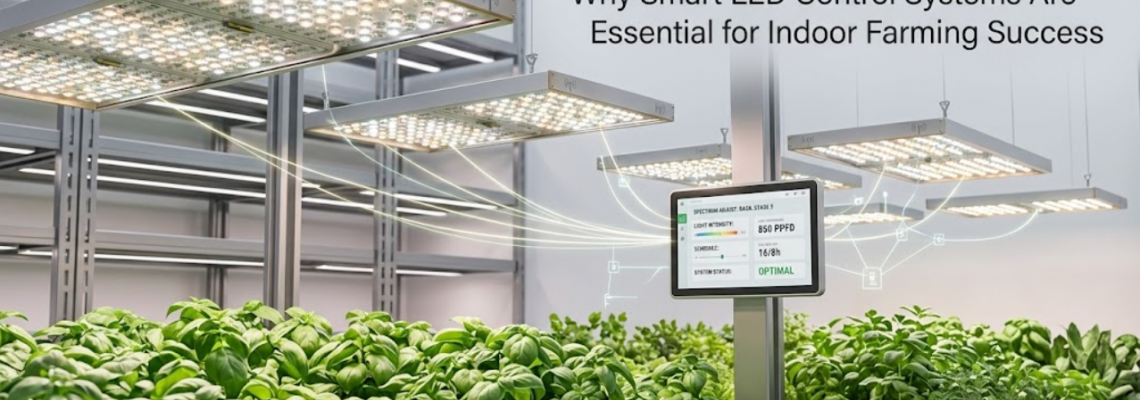
Indoor farming has evolved from a niche agricultural practice into a rapidly expanding industry that is helping address global challenges such as food security, urbanization, and climate change. From hydroponic systems and vertical farms to commercial greenhouses and controlled-environment agriculture (CEA), growers are increasingly relying on advanced technologies to maximize productivity and efficiency.
One of the most significant innovations driving this transformation is the rise of connected grow lights powered by smart LED control systems. These intelligent lighting solutions go far beyond simply illuminating plants. They provide real-time monitoring, automation, data analytics, and precise environmental control that help growers create ideal conditions for plant development.
As indoor farming operations become more sophisticated, connected grow lights are proving essential for improving crop quality, reducing operational costs, and ensuring consistent year-round production. This article explores why smart LED control systems are becoming a cornerstone of modern indoor farming success.
Understanding Connected Grow Lights
Connected grow lights are LED lighting systems integrated with smart technologies such as sensors, wireless communication, cloud-based software, and automated controls.
Unlike traditional grow lights that operate on fixed schedules, connected systems can monitor environmental conditions and adjust lighting settings automatically based on plant needs.
A typical connected grow lighting system may include:
Full-spectrum LED grow lights
Environmental sensors
Wireless connectivity
Mobile applications
Cloud-based management platforms
Automation software
Data analytics tools
Together, these components create a highly responsive and intelligent growing environment.
Why Lighting Is Critical in Indoor Farming
Plants rely on light for photosynthesis, the process that converts light energy into the fuel needed for growth and development.
In outdoor agriculture, sunlight provides this energy naturally. Indoor farms, however, depend on artificial lighting systems to replace or supplement natural light.
Proper lighting influences:
Plant growth rates
Root development
Leaf production
Flowering
Fruit formation
Crop quality
Without optimized lighting, plants may experience:
Slower growth
Reduced yields
Nutrient deficiencies
Uneven development
Increased stress
Connected grow lights help eliminate these challenges by providing precise control over lighting conditions throughout the plant life cycle.
The Evolution from Traditional to Smart LED Lighting
Traditional lighting systems often require manual operation and provide limited flexibility.
Older technologies such as high-pressure sodium (HPS) lamps and fluorescent lights present several challenges:
High energy consumption
Excessive heat production
Limited spectrum control
Frequent maintenance requirements
The introduction of LED grow lights significantly improved energy efficiency and light quality. However, smart LED control systems have taken performance to the next level.
Modern connected lighting systems can:
Adjust intensity automatically
Modify light spectrums
Respond to environmental changes
Generate actionable insights
Support remote management
This shift from static lighting to intelligent systems is revolutionizing indoor agriculture.
Real-Time Monitoring Improves Decision-Making
One of the most valuable features of connected grow lights is real-time monitoring.
Integrated sensors continuously collect data related to:
Light intensity
Temperature
Humidity
Carbon dioxide levels
Plant performance
Energy consumption
This information is transmitted to cloud-based platforms where growers can access detailed insights through smartphones, tablets, or computers.
Real-time visibility enables growers to identify potential problems early and make informed decisions before crop performance is affected.
Instead of relying on guesswork, growers can manage operations based on accurate, up-to-date information.
Automated Lighting for Consistent Growth
Consistency is critical in indoor farming.
Plants thrive when environmental conditions remain stable throughout their growth cycle. Smart LED control systems help maintain this stability through automation.
Automated functions may include:
Lighting schedules
Spectrum adjustments
Intensity control
Sunrise and sunset simulations
Zone-specific lighting management
For example:
Seedlings can automatically receive higher blue light levels to encourage root development.
Mature leafy greens can receive optimized full-spectrum lighting.
Fruiting crops can receive increased red light to stimulate flowering and fruit production.
Automation reduces labor requirements while ensuring plants receive optimal lighting conditions at all times.
Enhanced Energy Efficiency
Energy costs represent one of the largest operating expenses in indoor farming.
Although LED technology is already highly efficient, connected control systems further improve energy management.
Smart lighting systems can:
Dim lights when full intensity is unnecessary
Adjust output based on environmental conditions
Reduce lighting during periods of natural sunlight
Optimize schedules for maximum efficiency
By delivering only the amount of light required, growers can significantly reduce electricity consumption.
Lower energy usage not only decreases operational costs but also supports environmental sustainability.
Customized Light Recipes for Different Crops
Different crops have unique lighting requirements.
For example:
Lettuce requires specific light intensities for rapid vegetative growth.
Basil benefits from spectrum adjustments that enhance flavor and aroma.
Tomatoes need tailored lighting conditions during flowering and fruiting stages.
Connected grow lights allow growers to create customized light recipes designed for specific crops.
These recipes can include adjustments to:
Spectrum composition
Light intensity
Daily photoperiods
Growth-stage transitions
Customized lighting improves crop performance while maximizing productivity and quality.
Supporting Hydroponic and Vertical Farming Systems
Hydroponics and vertical farming are among the fastest-growing sectors in agriculture.
Both systems rely heavily on artificial lighting because plants are grown indoors under controlled conditions.
Connected grow lights provide several advantages:
Precise Environmental Control
Growers can optimize lighting conditions for every stage of plant development.
Efficient Space Utilization
LED fixtures can be placed close to plants due to their low heat output.
Improved Crop Consistency
Automated controls ensure uniform growing conditions across all production areas.
Scalability
Smart systems can easily expand as farming operations grow.
These benefits make connected lighting a critical component of successful indoor farming systems.
Remote Access and Control
One of the most convenient aspects of connected grow lights is remote management.
Using internet-connected devices, growers can:
Monitor facility performance
Adjust lighting settings
Change schedules
Receive alerts
Analyze data
Remote access allows farmers to maintain control over operations from virtually anywhere.
This capability is especially valuable for commercial growers managing multiple facilities or large-scale operations.
Remote management saves time, improves responsiveness, and reduces labor costs.
Data Analytics Drives Better Results
Connected grow lights generate valuable data that can be used to improve agricultural performance.
Analytics platforms help growers understand:
Which lighting strategies produce the best yields
How environmental conditions affect crop growth
Where energy savings can be achieved
Which crops perform best under specific conditions
Historical data analysis supports continuous improvement and more informed decision-making.
Some advanced systems now incorporate artificial intelligence (AI) to recommend lighting adjustments automatically based on crop performance and environmental conditions.
Reducing Human Error
Manual lighting management can introduce inconsistencies and mistakes that affect crop quality.
Common issues include:
Incorrect schedules
Inconsistent intensity settings
Missed adjustments
Equipment oversight
Smart LED control systems help eliminate many of these risks through automation and real-time monitoring.
Reducing human error improves consistency, crop health, and overall operational reliability.
Sustainability Benefits
Sustainability is becoming increasingly important in agriculture.
Connected grow lights contribute to environmentally responsible farming practices in several ways.
Lower Energy Consumption
Optimized lighting reduces electricity usage.
Reduced Carbon Emissions
Improved energy efficiency lowers the environmental footprint of indoor farming operations.
Resource Optimization
Smart systems support efficient use of water, nutrients, and environmental controls.
Reduced Waste
Stable growing conditions help prevent crop losses and improve harvest consistency.
These benefits align with growing consumer demand for sustainable food production methods.
Predictive Maintenance Improves Reliability
Connected lighting systems can also monitor equipment performance.
Predictive maintenance tools analyze operational data to identify potential issues before equipment fails.
Benefits include:
Reduced downtime
Lower maintenance costs
Extended equipment lifespan
Improved system reliability
For example, a system may detect unusual power consumption patterns in a lighting fixture and alert operators to potential maintenance needs.
This proactive approach helps prevent costly disruptions.
Applications Beyond Commercial Farms
While commercial agriculture is a major user of connected grow lights, the technology is becoming increasingly accessible to other sectors.
Home Growers
Smart grow lights allow hobbyists to automate indoor gardens and herb-growing systems.
Educational Institutions
Schools and universities use connected lighting systems for agricultural research and training.
Research Facilities
Scientists use precise environmental controls to study plant behavior and optimize cultivation techniques.
Urban Farming Projects
Community farms benefit from efficient, scalable lighting solutions.
As costs continue to decrease, connected grow lights are becoming available to a wider range of users.
Emerging Trends in Smart Grow Lighting
The future of connected grow lights continues to evolve rapidly.
Key trends include:
AI-Powered Automation
Artificial intelligence is helping systems make autonomous decisions based on real-time plant data.
Machine Learning Optimization
Algorithms continuously improve lighting strategies to maximize crop performance.
Digital Twin Technology
Virtual farm models allow growers to simulate changes before implementing them.
Renewable Energy Integration
Many farms are pairing smart lighting systems with solar power to improve sustainability.
Advanced Sensor Networks
New sensors provide increasingly detailed insights into plant health and environmental conditions.
These innovations are expected to further enhance indoor farming productivity and efficiency.
The Future of Indoor Farming
As urban populations expand and climate challenges affect traditional agriculture, indoor farming will play an increasingly important role in global food production.
Connected grow lights will be central to this transformation.
Future systems may feature:
Fully autonomous operation
AI-driven crop management
Self-optimizing lighting environments
Integration with robotic farming systems
Advanced predictive analytics
These technologies will help growers produce more food with fewer resources while maintaining exceptional quality and consistency.
Final Thoughts
Connected grow lights and smart LED control systems are revolutionizing indoor farming by combining precision lighting, automation, real-time monitoring, and data-driven decision-making. These technologies enable growers to create ideal growing environments that support healthier plants, higher yields, and more efficient operations.
From hydroponic farms and vertical agriculture facilities to greenhouses and home gardens, connected lighting solutions provide measurable benefits that extend far beyond traditional illumination. Improved energy efficiency, customized crop management, predictive maintenance, and remote accessibility make smart LED systems essential tools for modern agriculture.
As indoor farming continues to evolve, connected grow lights will remain at the forefront of innovation, helping growers achieve sustainable, productive, and profitable farming success in an increasingly technology-driven world.
2 Comment(s)
Download the file to the mods folder, or if the file downloads directly to your "Downloads" folder, move the file to the mods folder. If you set a custom folder for the installation, the mods folder will be located in mynewfabricinstallation\mods If you use Windows, download the .exe version (Download For Windows), because it doesn't require Java to be installed on your system.
References:
Roulette number clients1.google.com.gt
Leave a Comment