
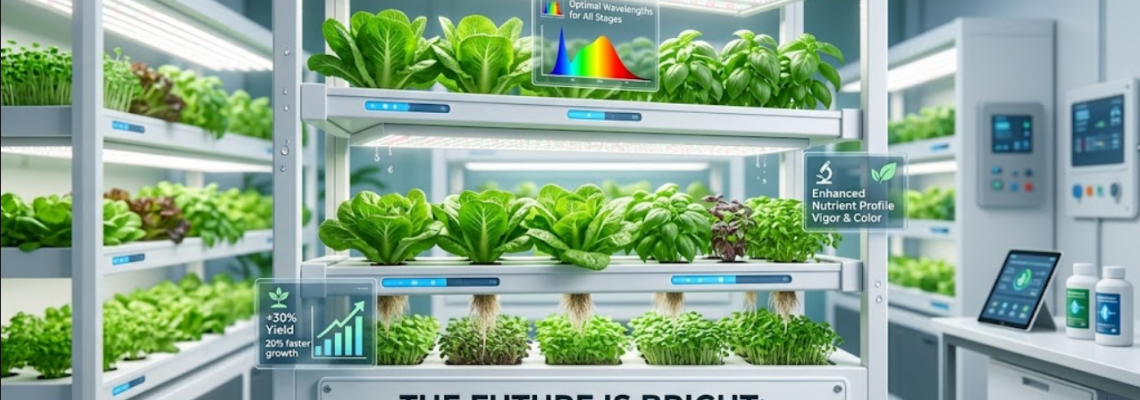
Hydroponic farming is rapidly transforming the future of agriculture. By growing plants without soil and using nutrient-rich water systems, hydroponics allows farmers to produce crops faster, cleaner, and more efficiently than traditional farming methods. However, one of the most critical elements in any successful hydroponic setup is lighting.
As indoor farming technology evolves, full spectrum LED grow lights are becoming the preferred solution for both home growers and commercial hydroponic farms. These advanced lighting systems mimic natural sunlight and provide plants with the ideal wavelengths needed for every stage of growth. From leafy greens and herbs to fruiting crops like tomatoes and strawberries, full spectrum LEDs are helping growers achieve healthier plants, faster harvests, and higher yields.
In this article, we’ll explore how full spectrum LEDs are revolutionizing hydroponic crop growth and why they are considered the future of modern indoor farming.
What Are Full Spectrum LED Grow Lights?
Full spectrum LED grow lights are specially designed lighting systems that replicate the natural spectrum of sunlight. Unlike traditional grow lights that focus on limited wavelengths, full spectrum LEDs provide a balanced combination of:
Blue light
Red light
White light
Far-red wavelengths
Sometimes UV light
Each wavelength plays a unique role in plant development. Blue light supports vegetative growth and strong leaf formation, while red light encourages flowering and fruit production. By combining multiple wavelengths, full spectrum LEDs create an ideal environment for plants to thrive indoors.
This balanced lighting system allows hydroponic crops to grow more naturally and efficiently throughout their entire growth cycle.
Why Lighting Is Essential in Hydroponic Farming
In outdoor farming, sunlight provides the energy plants need for photosynthesis. In hydroponic systems, artificial lighting replaces natural sunlight, making it one of the most important factors affecting plant health and productivity.
Poor lighting can lead to:
Weak plant growth
Reduced yields
Poor coloration
Slower development
Increased energy costs
High-quality LED grow lights solve these problems by delivering optimized light intensity and precise wavelengths that plants can efficiently absorb.
For hydroponic growers, better lighting directly translates into healthier crops and higher profitability.
The Biggest Benefits of Full Spectrum LEDs
1. Faster Plant Growth
One of the most noticeable benefits of full spectrum LEDs is accelerated plant growth. Because plants receive ideal lighting conditions, they can perform photosynthesis more efficiently.
This results in:
Faster seed germination
Stronger root systems
Rapid vegetative growth
Shorter harvest cycles
Hydroponic growers can produce more crops in less time, increasing overall productivity.
2. Higher Crop Yields
Modern hydroponic farms aim to maximize production while using limited indoor space. Full spectrum LEDs help increase yields by supporting optimal growth during every stage of plant development.
Benefits include:
Larger leaves
More flowers
Increased fruit production
Improved root development
This is especially important for commercial farms where maximizing output is essential for profitability.
3. Better Crop Quality
Consumers today expect fresh produce with vibrant color, rich flavor, and high nutritional value. Full spectrum LEDs help improve crop quality by creating ideal growing conditions.
Hydroponic crops grown under advanced LEDs often show:
Better texture
Enhanced flavor
Richer color
Improved nutrient content
Stronger overall health
Leafy greens become greener, herbs become more aromatic, and fruiting crops often develop improved taste and appearance.
4. Energy Efficiency
Traditional grow lights such as high-pressure sodium (HPS) and metal halide systems consume large amounts of electricity and generate excessive heat.
Full spectrum LEDs are far more energy-efficient.
Advantages include:
Lower electricity bills
Reduced power consumption
Longer operational lifespan
Lower maintenance costs
Many modern LED systems use significantly less energy while producing superior lighting performance compared to older technologies.
For commercial hydroponic operations, this can lead to major long-term savings.
5. Reduced Heat Output
Heat management is one of the biggest challenges in indoor farming. Older grow lights often produce intense heat, which can damage crops and increase cooling expenses.
Full spectrum LEDs emit much less heat, allowing growers to:
Maintain stable temperatures
Reduce water evaporation
Place lights closer to plants
Lower ventilation costs
This creates a safer and more controlled growing environment.
Lower heat output is especially valuable in vertical farming systems where space is limited.
6. Year-Round Crop Production
One of the greatest advantages of hydroponics combined with LED technology is the ability to grow crops year-round.
Regardless of outdoor weather conditions, growers can maintain:
Consistent lighting
Stable temperatures
Controlled humidity
Predictable harvest cycles
This makes hydroponic farming ideal for regions with:
Harsh winters
Limited sunlight
Urban environments
Extreme climates
Full spectrum LEDs ensure reliable crop production in every season.
7. Perfect for Vertical Farming
Vertical farming is becoming increasingly popular as cities seek sustainable food production solutions. Since crops are grown in stacked layers, lighting efficiency is essential.
Full spectrum LEDs are ideal for vertical farms because they:
Use less space
Generate minimal heat
Provide uniform light distribution
Reduce operating costs
Their compact design allows growers to maximize production in smaller indoor areas.
As urban agriculture continues to expand, LED-powered vertical farming systems are expected to play a major role in global food production.
8. Environmentally Friendly Farming
Sustainability is a growing priority in agriculture. Full spectrum LEDs support environmentally responsible farming practices in several ways.
Compared to traditional grow lights, LEDs offer:
Lower carbon emissions
Reduced electricity usage
Longer product lifespan
Less waste from replacements
Improved resource efficiency
Combined with water-saving hydroponic systems, LEDs help create a more sustainable approach to food production.
Best Crops for Full Spectrum LED Hydroponic Systems
Many crops perform exceptionally well under full spectrum LED lighting.
Leafy Greens
Lettuce
Kale
Spinach
Arugula
Herbs
Basil
Mint
Parsley
Cilantro
Fruiting Crops
Tomatoes
Peppers
Cucumbers
Strawberries
Microgreens
Sunflower shoots
Radish sprouts
Pea shoots
These crops benefit from rapid growth cycles and controlled indoor environments.
How Full Spectrum LEDs Improve Photosynthesis
Photosynthesis is the process plants use to convert light into energy. Different wavelengths influence different biological functions.
Full spectrum LEDs provide balanced wavelengths that help:
Increase chlorophyll production
Improve nutrient absorption
Support root development
Enhance flowering and fruiting
By delivering the right light spectrum, plants can grow more efficiently and remain healthier throughout their life cycle.
Smart Farming and LED Technology
Modern agriculture is becoming more data-driven and automated. Many advanced hydroponic farms now integrate LED systems with smart technology.
Innovations include:
Automated lighting schedules
Climate control systems
AI-powered monitoring
Remote management apps
Energy optimization tools
These technologies help growers maximize crop performance while reducing labor and operational costs.
Choosing the Right Full Spectrum LED Grow Light
Not all LED grow lights offer the same performance. Before purchasing, growers should consider several important factors.
Light Intensity
Choose lights with appropriate PAR output for your crops.
Coverage Area
Ensure the system covers your entire growing space evenly.
Energy Efficiency
Look for high-efficiency models with lower power consumption.
Cooling System
Reliable heat management improves performance and lifespan.
Adjustable Spectrum Features
Some advanced LEDs allow customization for different growth stages.
Investing in quality lighting can significantly improve hydroponic farming success.
The Future of Indoor Farming
As global populations grow and agricultural land becomes more limited, indoor farming technologies will continue expanding.
Full spectrum LEDs are helping solve major farming challenges by enabling:
Local food production
Urban agriculture
Sustainable farming
Controlled-environment agriculture
Reduced resource consumption
Experts predict that LED-powered hydroponic farms will become increasingly important in meeting future food demands.
Final Thoughts
Hydroponic farming is entering a new era of innovation, and full spectrum LED grow lights are leading the transformation. By delivering balanced wavelengths, energy efficiency, reduced heat, and improved crop quality, these advanced lighting systems are changing how food is grown indoors.
Whether you’re a home gardener growing herbs in a small setup or a commercial farmer operating a large vertical farm, upgrading to full spectrum LEDs can dramatically improve plant health, crop yields, and long-term sustainability.
As technology continues to evolve, one thing is clear — the future of hydroponic farming is brighter than ever.
13 Comment(s)
References:
Best online casinos google.com.uy
References:
Roulette hot https://reibert.info/
References:
Slots 777 avtomobilistam.ru
References:
Casino calgary gitea.learningunix.net
References:
Suffolk downs casino jobexpertsindia.com
References:
Fairmont le manoir richelieu forums.cardhunter.com
References:
Casino scorsese http://cse.google.de/url?sa=t&url=https://www.didaweb.net/risorse/visita.php?url=https://instantcasinodeutschland.de/
Customers get a code on their telephone or email, and after confirmation, the process is completed. Some deposits and withdrawals may take more time than average 60 seconds, but it is currently one of the fastest payment methods. Our team of Gamblenator experts continuously seeks out the top casinos that use this payment method to see what they’re about.
Sobald Ihr Konto verifiziert ist, stehen Ihnen alle Funktionen unserer Plattform offen. Wir haben den Anmeldeprozess bei Boaboa Casino so einfach wie möglich gestaltet, damit Sie schnell mit dem Spielen beginnen können. Bei Boaboa Casino laden wir Sie ein, eine der aufregendsten Spielplattformen im deutschsprachigen Raum zu entdecken. Wir verwenden modernste SSL-Verschlüsselung, die deine Daten auf dem Mobilgerät genauso schützt wie auf dem Desktop. Alle unsere Bonusangebote – einschließlich des Willkommensbonus von bis zu 500 € und 200 Freispielen – sind vollständig über das Mobilgerät verfügbar. Unser mobiles Angebot funktioniert vollständig über den Browser deines Smartphones – einfach unsere Webseite aufrufen und sofort losspielen, ohne Installation.
References:
Red garter casino https://kigalilife.co.rw/author/darcyamos56
References:
River spirit casino http://www.cs-tec.co.kr/
References:
Casino ottawa raovatonline.org
References:
No download casino http://image.google.me
Leave a Comment