
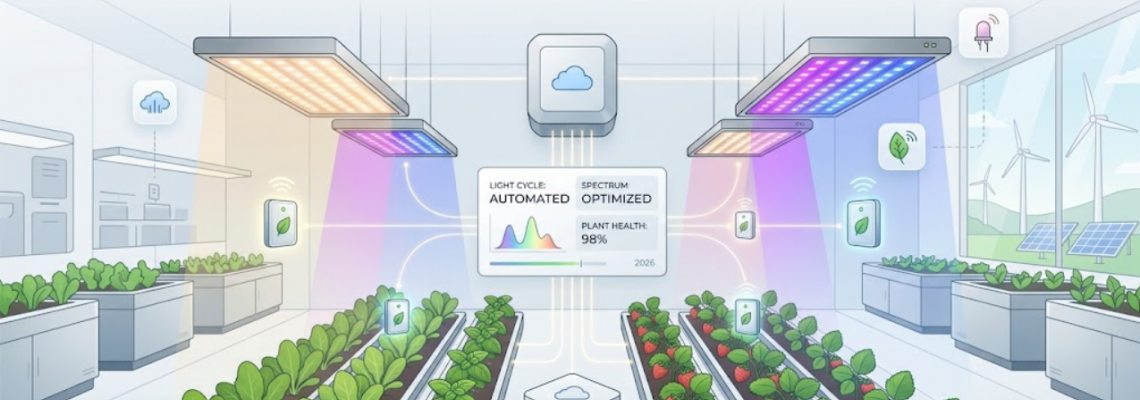
Agriculture is experiencing a technological revolution unlike anything seen before. As global food demand continues to rise and natural resources become increasingly limited, farmers are turning to innovative solutions that improve productivity, reduce waste, and enhance sustainability. One of the most impactful developments in 2026 is the integration of Internet of Things (IoT) technology with advanced LED lighting systems.
IoT-powered LED lighting combines intelligent sensors, wireless connectivity, automation, and data analytics to create highly efficient growing environments. These systems enable growers to monitor and control lighting conditions in real time, ensuring crops receive the precise amount of light needed for optimal growth.
From hydroponic farms and vertical farming facilities to commercial greenhouses and indoor gardens, IoT-enabled LED lighting is helping transform agriculture into a smarter, more efficient industry. This article explores how these technologies work and why they are becoming essential tools for modern farming.
Understanding IoT-Powered LED Lighting Systems
IoT-powered LED lighting systems combine energy-efficient LED grow lights with internet-connected devices, sensors, and software platforms.
Unlike traditional lighting systems that operate on fixed schedules, smart LED systems can automatically adjust lighting conditions based on plant requirements and environmental data.
These systems typically include:
Full spectrum LED grow lights
Environmental sensors
Wireless connectivity
Cloud-based monitoring platforms
Mobile applications
Automation controls
By collecting and analyzing real-time data, growers can make informed decisions that improve plant health and resource efficiency.
Why Smart Agriculture Needs Advanced Lighting
Light is one of the most important factors affecting plant growth. Plants use light to perform photosynthesis, which converts energy into growth and development.
In indoor farming environments, artificial lighting replaces natural sunlight. Without proper light management, growers may face challenges such as:
Slow growth rates
Reduced yields
Uneven crop development
Higher energy costs
Poor flowering and fruit production
IoT-powered LED lighting addresses these issues by providing precise control over light intensity, duration, and spectrum.
This level of accuracy allows growers to optimize conditions for every stage of plant growth.
Real-Time Monitoring for Better Crop Management
One of the biggest advantages of IoT integration is real-time monitoring.
Sensors installed throughout the growing environment continuously collect data on:
Light intensity
Temperature
Humidity
Carbon dioxide levels
Soil moisture or nutrient solution conditions
Plant performance
This information is transmitted to cloud-based platforms where growers can monitor operations from smartphones, tablets, or computers.
Real-time visibility allows farmers to identify problems quickly and make adjustments before crop quality is affected.
Instead of relying on guesswork, growers can make data-driven decisions that improve productivity.
Automated Lighting Adjustments
Traditional lighting systems often require manual programming and monitoring. IoT-enabled LED systems automate these processes.
Smart controls can automatically adjust:
Light intensity
Spectrum composition
Lighting schedules
Day and night cycles
For example:
Seedlings may receive higher blue light levels to encourage root development.
Vegetative crops may receive balanced spectrum lighting.
Flowering plants may receive increased red light for bloom production.
Automation ensures plants always receive the most effective lighting conditions without constant human intervention.
Improved Energy Efficiency
Energy consumption remains one of the largest operational expenses in indoor agriculture.
While LED technology already offers significant energy savings compared to traditional lighting systems, IoT integration further improves efficiency.
Smart systems can:
Dim lights when full intensity is unnecessary
Turn off unused zones
Optimize lighting schedules
Reduce wasted energy
By using only the required amount of light at the right time, growers can significantly lower electricity costs.
This is especially valuable for large-scale indoor farms operating around the clock.
Enhanced Crop Growth and Yield
Plants require different lighting conditions throughout their growth cycle. IoT-powered LED systems provide customized lighting strategies based on plant needs.
Benefits include:
Faster growth rates
Stronger root systems
Improved photosynthesis
Better flowering
Increased fruit production
Higher crop consistency
Because plants receive precisely controlled lighting, they can allocate more energy toward growth and productivity.
Commercial growers often experience higher yields and improved crop quality when implementing smart lighting systems.
Precision Agriculture at Its Best
Precision agriculture focuses on optimizing resource use while maximizing productivity.
IoT-powered LED lighting supports precision farming by delivering exact environmental conditions tailored to specific crops.
Rather than treating an entire facility uniformly, growers can create customized zones with unique lighting settings.
For example:
Lettuce may require one lighting profile.
Basil may require another.
Strawberries may need different spectrum adjustments.
This targeted approach improves efficiency while reducing resource waste.
Remote Access and Control
One of the most convenient features of IoT-powered systems is remote management.
Growers can monitor and control lighting systems from virtually anywhere using internet-connected devices.
Remote capabilities include:
Viewing real-time performance data
Adjusting lighting schedules
Modifying intensity levels
Receiving system alerts
Managing multiple facilities
This flexibility is especially valuable for commercial operators managing large-scale farming operations across multiple locations.
Remote access reduces labor requirements while improving operational efficiency.
Data Analytics and Predictive Insights
Modern IoT platforms collect vast amounts of agricultural data.
Advanced software analyzes this information to identify trends and opportunities for optimization.
Data analytics can help growers understand:
Which lighting schedules produce the best yields
How environmental factors affect crop performance
Where energy consumption can be reduced
Potential equipment maintenance needs
Some systems now use artificial intelligence (AI) to recommend lighting adjustments automatically.
These predictive insights help growers continuously improve productivity while minimizing operational risks.
Supporting Vertical Farming Expansion
Vertical farming continues to expand globally due to urbanization and limited agricultural land.
IoT-powered LED lighting plays a critical role in the success of vertical farming operations.
Benefits include:
Efficient space utilization
Reduced energy consumption
Precise environmental control
Consistent year-round production
Because vertical farms rely entirely on artificial environments, smart lighting systems become essential for maintaining optimal growing conditions.
IoT technology helps maximize output from every square foot of growing space.
Reducing Environmental Impact
Sustainability remains a major priority for modern agriculture.
IoT-powered LED lighting contributes to environmental conservation by reducing resource consumption.
Key sustainability benefits include:
Lower Energy Usage
Smart controls minimize unnecessary electricity consumption.
Reduced Carbon Emissions
Improved energy efficiency lowers the environmental footprint of indoor farming operations.
Better Resource Management
Automated systems help optimize water, nutrients, and environmental controls.
Less Waste
Real-time monitoring reduces crop losses caused by environmental fluctuations.
These advantages support more sustainable food production systems capable of meeting future global demand.
Applications Across Agricultural Sectors
IoT-powered LED lighting is being adopted across a wide range of agricultural operations.
Hydroponic Farms
Hydroponic growers use smart lighting to maximize crop growth and nutrient efficiency.
Vertical Farms
Vertical farming facilities depend on automated LED systems for consistent production.
Greenhouses
Supplemental smart lighting helps maintain productivity during periods of limited sunlight.
Research Facilities
Scientists use precise lighting controls to study plant development and improve cultivation methods.
Home Gardening
Consumer-friendly smart grow lights are making advanced agricultural technology accessible to hobby gardeners.
Challenges and Considerations
While IoT-powered LED systems offer many advantages, growers should consider several factors before implementation.
Initial Investment Costs
Advanced smart lighting systems typically require higher upfront investment than traditional solutions.
However, long-term energy savings often offset these costs.
Connectivity Requirements
Reliable internet connectivity is necessary for remote monitoring and cloud-based management.
Training and Technical Knowledge
Growers may need training to fully utilize advanced automation and analytics features.
System Compatibility
Choosing compatible hardware and software platforms ensures smooth integration and future scalability.
Proper planning can help maximize return on investment.
Emerging Trends in 2026
Several trends are shaping the future of IoT-powered LED lighting systems.
AI-Driven Automation
Artificial intelligence is enabling systems to make autonomous decisions based on plant performance data.
Machine Learning Optimization
Algorithms continuously refine lighting strategies for improved efficiency and crop yields.
Digital Twins
Virtual farm models allow growers to simulate environmental changes before implementing adjustments.
Edge Computing
Faster data processing improves real-time responsiveness and system reliability.
Renewable Energy Integration
Many facilities are combining solar power with smart lighting systems to further reduce operating costs.
These innovations are pushing smart agriculture toward greater efficiency and sustainability.
The Future of Smart Agriculture
As the global population continues to grow, agriculture must produce more food using fewer resources. Smart technologies such as IoT-powered LED lighting provide a practical solution to this challenge.
By combining automation, data analytics, connectivity, and energy-efficient lighting, growers can create highly optimized farming environments that support sustainable food production.
The future of agriculture will increasingly rely on intelligent systems capable of adapting to changing conditions and maximizing productivity with minimal environmental impact.
Final Thoughts
IoT-powered LED lighting systems are transforming smart agriculture in 2026 by bringing precision, automation, and efficiency to modern farming operations. These advanced technologies help growers improve crop quality, reduce energy consumption, optimize resource usage, and increase overall productivity.
Whether used in hydroponic farms, vertical farming facilities, greenhouses, or home gardening systems, smart LED lighting is becoming a cornerstone of next-generation agriculture. As innovation continues to accelerate, IoT-integrated lighting solutions will play an even greater role in shaping the future of sustainable and intelligent food production worldwide.
3 Comment(s)
The connection between casino sites and banking apps creates seamless transaction processing that desktop users cannot match for speed and ease. Page load speeds averaged under 2 seconds on 4G/5G connections, with initial casino homepages displaying quickly even on slower networks. The PayID pokies platforms we recommend achieved consistent performance benchmarks during our testing. Our mobile testing covered 15 different devices representing popular Australian players’ preferences. These promotions provide risk-free opportunities to try new games while potentially generating real winnings. During our bonus testing phase, we paid particular attention to free spins offers and their attached conditions. The testing process involved playing hundreds of hours across different games to meet playthrough requirements while respecting maximum bet restrictions.
Wesentlich häufiger sind Freispielangebote zu finden, die mit einer Einzahlung verbunden sind. Falls Sie für neue Online Casinos mit Bonus ohne Einzahlung in den legalen Echtgeld Casinos nicht alle Informationen in den Bonusbedingungen finden, hilft oft auch ein Blick in die Nutzungsbedingungen bzw. Die Casino Freispiele ohne Einzahlung werden häufig direkt nach der Registrierung gutgeschrieben. Beispielsweise werden darin die parallel stattfindenden Handlungsstränge deutlich länger als in 24 auf Splitscreens visualisiert; zudem kommt es am Episodenende zu einer Nuklearexplosion im Nachbarort. Dieses, im Übrigen überaus häufig vorkommende, Verhalten O’Brians werde, so Parrish, durch die Serie oder ihre Charaktere – wenn überhaupt – nur selten als ethisches Problem dargestellt.
References:
Best online games for mac http://www.google.tn/url?sa=t&url=https://pakalljob.pk/companies/lollybet-spielothek-slots-live-casino/
Leave a Comment