
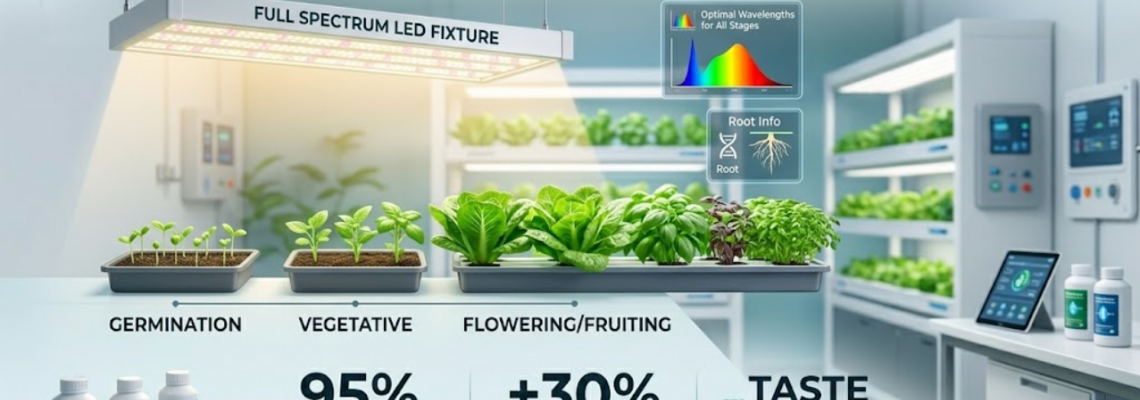
Hydroponic farming is revolutionizing modern agriculture by enabling plants to grow faster, healthier, and more efficiently without using soil. As indoor farming and controlled-environment agriculture become increasingly popular, growers are seeking innovative technologies that improve crop quality while lowering energy consumption. One of the biggest advancements driving this change is the adoption of full spectrum LED grow lights.
From small indoor gardens to large commercial hydroponic operations, growers worldwide are switching to full spectrum LEDs because they provide better plant growth, energy efficiency, and reliable year-round production. These advanced lighting systems closely mimic natural sunlight, helping plants receive the balanced light needed during every growth stage from seed germination to flowering and harvest.
Unlike traditional grow lights, full spectrum LEDs consume less electricity, produce less heat, and support healthier crop development. They also help improve yield quality, reduce maintenance costs, and create more sustainable growing environments.
This guide explores how full spectrum LED technology works, why hydroponic growers are rapidly adopting it, and the key benefits it offers for modern indoor farming from seed to harvest.
Understanding Hydroponic Farming
Hydroponics is a method of growing plants without soil. Instead of relying on traditional ground nutrients, plants grow in nutrient-rich water solutions.
Hydroponic systems provide:
Faster plant growth
Better nutrient control
Reduced water usage
Indoor growing possibilities
Space-efficient farming
Because hydroponic farms often operate indoors, artificial lighting becomes one of the most important components of successful crop production.
Without proper lighting, plants cannot perform photosynthesis effectively.
What Are Full Spectrum LED Grow Lights?
Full spectrum LED grow lights are advanced lighting systems designed to mimic the natural spectrum of sunlight. They provide plants with the light wavelengths needed throughout all growth stages.
Unlike older grow lights that focused mainly on red and blue wavelengths, full spectrum LEDs offer a broader and more balanced range of light.
This includes:
Blue light for vegetative growth
Red light for flowering and fruiting
Green light for canopy penetration
Additional wavelengths that support overall plant health
The result is a lighting solution that supports plants from germination to harvest.
Why Lighting Matters in Hydroponics
Light is one of the most important factors in plant growth. In hydroponic farming, growers have complete control over environmental conditions, making lighting quality extremely important.
Proper lighting affects:
Photosynthesis
Root development
Leaf growth
Flowering cycles
Fruit production
Crop quality
Traditional lighting systems often generate excessive heat and consume large amounts of electricity. Full spectrum LEDs solve many of these problems while improving overall efficiency.
The Shift from Traditional Grow Lights to LEDs
For many years, hydroponic growers relied on older lighting technologies such as:
High-pressure sodium (HPS) lights
Metal halide lamps
Fluorescent grow lights
While these systems supported indoor farming, they also created challenges including:
High energy costs
Excessive heat
Shorter lifespan
Frequent bulb replacement
Full spectrum LED technology has become a preferred alternative because it offers stronger performance with lower operational costs.
Major Benefits of Full Spectrum LEDs
1. Energy Efficiency
One of the biggest reasons growers switch to LED lighting is energy savings.
Full spectrum LEDs:
Consume less electricity
Reduce utility bills
Improve long-term cost efficiency
Indoor farming facilities operate lights for many hours daily, so reducing power consumption has a major financial impact.
Compared to traditional lighting systems, LEDs can significantly lower energy usage while maintaining excellent crop performance.
2. Lower Heat Output
Traditional grow lights produce a large amount of heat, which can damage plants and increase cooling costs.
Full spectrum LEDs generate much less heat, helping growers:
Maintain stable temperatures
Reduce ventilation requirements
Prevent plant stress
Lower air conditioning expenses
Lower heat also allows lights to be positioned closer to plants without causing burning or dehydration.
3. Better Plant Growth
Full spectrum LEDs support healthy growth during every plant stage.
Plants receive balanced wavelengths that encourage:
Strong root systems
Healthy leaves
Compact growth
Faster development
Improved flowering
Many hydroponic growers notice stronger plant structure and more consistent crop quality after upgrading to full spectrum lighting.
Supporting Every Growth Stage
Seed Germination
Young seedlings require gentle but effective lighting.
Blue wavelengths in full spectrum LEDs help encourage:
Early root growth
Compact seedlings
Healthy leaf development
Proper lighting during germination creates stronger plants later in the growth cycle.
Vegetative Growth
During the vegetative phase, plants focus on growing stems and leaves.
Full spectrum LEDs provide the balanced light needed for:
Thick foliage
Faster growth
Stronger stems
Improved photosynthesis
Healthy vegetative growth is essential for maximizing future yields.
Flowering and Fruiting
Red wavelengths become especially important during flowering and fruit production stages.
Full spectrum LEDs help:
Increase flower development
Improve fruit production
Support crop quality
Encourage larger yields
This balanced approach allows growers to use a single lighting system throughout the entire crop cycle.
Improved Crop Quality
Hydroponic growers are not only focused on quantity — quality matters equally.
Full spectrum LEDs often improve:
Color
Taste
Texture
Nutritional value
Plant consistency
Many growers report healthier crops with better market value after switching to LED systems.
This is especially important for:
Leafy greens
Herbs
Tomatoes
Strawberries
Specialty crops
Longer Lifespan and Durability
Traditional bulbs require frequent replacement, increasing maintenance costs.
Full spectrum LED grow lights are designed for long-term performance.
Benefits include:
Longer operational lifespan
Reduced maintenance
More consistent lighting
Lower replacement costs
Some LED systems can last for years with proper usage.
This reliability is particularly valuable for commercial hydroponic operations.
Smart Technology and Automation
Modern LED grow systems often include smart technology features.
Advanced systems may offer:
Adjustable light intensity
Automated schedules
Spectrum customization
Smartphone controls
Environmental integration
These features help growers optimize crop conditions while improving efficiency and convenience.
Automation is becoming increasingly important in modern indoor agriculture.
Sustainability and Environmental Benefits
Sustainability is a major reason many growers choose hydroponics and LED technology together.
Full spectrum LEDs support eco-friendly farming by:
Reducing electricity consumption
Lowering carbon emissions
Minimizing waste
Supporting water-efficient agriculture
Compared to traditional farming and lighting systems, hydroponics combined with LEDs creates a more sustainable growing model.
This approach is especially important as global food demand continues to rise.
Best Crops for Full Spectrum LED Hydroponics
Many plants thrive under full spectrum LED lighting.
Popular hydroponic crops include:
Lettuce
Basil
Spinach
Kale
Tomatoes
Peppers
Strawberries
Microgreens
Different crops may require slight adjustments in light intensity or duration, but full spectrum LEDs provide strong flexibility across various plant types.
Tips for Choosing Full Spectrum LED Grow Lights
Not all grow lights are the same. Choosing the right LED system is important for maximizing results.
Consider Grow Space Size
Larger spaces require stronger or multiple lighting units.
Always calculate:
Coverage area
Hanging height
Light intensity needs
Proper light distribution ensures even plant growth.
Check Energy Efficiency Ratings
High-quality LEDs provide strong output while minimizing energy use.
Look for:
Efficient power consumption
Reliable performance
Trusted manufacturer reviews
Energy-efficient systems save money over time.
Evaluate Spectrum Quality
True full spectrum lighting should support all plant stages.
Growers should ensure the light system includes balanced wavelengths for:
Seedlings
Vegetative growth
Flowering
Quality spectrum design directly affects plant health and productivity.
Common Mistakes Growers Should Avoid
Placing Lights Too Close
Even though LEDs produce less heat, placing them too close can still stress plants.
Proper hanging height is important for balanced growth.
Ignoring Light Schedules
Plants require consistent light cycles.
Using timers helps maintain healthy growth patterns and prevents stress.
Buying Low-Quality LEDs
Cheap lighting systems may provide poor spectrum quality and weak performance.
Investing in reliable lighting improves long-term results.
The Future of Hydroponic Farming
The future of agriculture is moving toward controlled-environment farming, automation, and energy-efficient technologies.
Full spectrum LEDs are expected to play a major role in:
Vertical farming
Urban agriculture
Greenhouse production
Sustainable food systems
As technology improves, growers will continue finding new ways to maximize crop yields while reducing environmental impact.
Hydroponics and LED lighting together are shaping the next generation of farming.
Final Thoughts
From seed germination to final harvest, full spectrum LED grow lights are revolutionizing hydroponic farming. Their energy efficiency, balanced light output, lower heat production, and ability to support every growth stage make them one of the most valuable tools in modern indoor agriculture.
As growers continue seeking smarter, more sustainable ways to produce food, the shift toward full spectrum LEDs is becoming impossible to ignore. Whether for home gardening or commercial farming, these advanced lighting systems help create healthier plants, stronger yields, and more efficient operations.
For hydroponic growers looking to improve performance while reducing long-term costs, full spectrum LEDs offer a brighter future for indoor farming.
3 Comment(s)
References:
Casino duisburg permanenzen thehispanicamerican.com
References:
Casino online italiani http://www.cs-tec.co.kr/pg/bbs/board.php?bo_table=comm01&wr_id=227944
With its lively ambiance and passionate culinary team, Serious Pie truly
elevates casual dining. With a perfect blend of traditional and contemporary, Noi
Thai certainly lives up to its reputation as a staple in the city's dining scene.
I indulged in their moules-frites, perfectly steamed mussels paired with crispy fries that danced with
flavor. If you're in the mood for a casual yet memorable
meal, Von's is a must-visit destination! I was particularly enchanted by the truffle fries, which are crispy perfection with
a hint of decadence. The friendly staff added a personal touch
that made my visit feel special. The wine list is impressive, perfectly complementing the
rich flavors of each dish.
Leave a Comment