
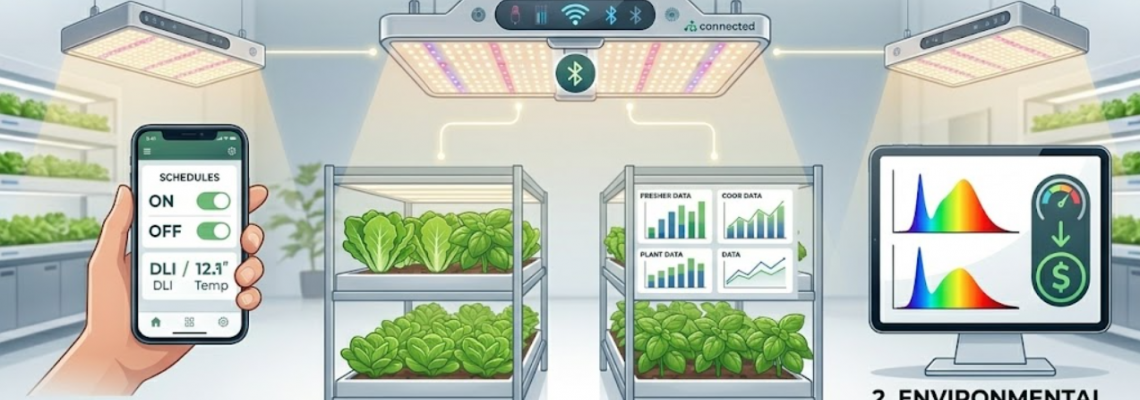
The agricultural industry is rapidly evolving as technology reshapes how crops are grown, monitored, and managed. Indoor farming, hydroponics, vertical agriculture, and greenhouse cultivation have all benefited from innovations that increase efficiency and improve crop production. Among these advancements, the integration of Internet of Things (IoT) technology with modern LED grow lights is emerging as one of the most transformative developments in smart agriculture.
Traditional grow lights have long been used to support plant growth in controlled environments. However, today's growers need more than just illumination. They require intelligent systems capable of adjusting to changing conditions, optimizing energy consumption, and providing real-time insights into crop performance. This is where IoT-powered LED grow lights are making a significant impact.
By combining energy-efficient lighting with sensors, automation, connectivity, and data analytics, smart LED grow lights are helping farmers achieve healthier plants, higher yields, and more sustainable operations. As agriculture moves toward a more technology-driven future, IoT integration is becoming a key component of modern farming success.
This article explores the benefits of IoT integration in LED grow lights and why smart lighting is shaping the future of indoor agriculture.
Understanding IoT-Enabled LED Grow Lights
IoT, or the Internet of Things, refers to a network of connected devices that collect, exchange, and analyze data through internet connectivity. When integrated into LED grow lighting systems, IoT technology allows growers to monitor and control lighting conditions remotely and automatically.
A typical IoT-enabled grow lighting system may include:
Full spectrum LED grow lights
Environmental sensors
Wireless communication devices
Cloud-based software platforms
Mobile applications
Automated controllers
Together, these components create an intelligent ecosystem capable of responding to plant needs and environmental changes in real time.
Why Smart Lighting Matters in Modern Agriculture
Light is one of the most critical factors influencing plant growth. It affects photosynthesis, root development, flowering, fruit production, and overall crop health.
In indoor farming environments, artificial lighting replaces natural sunlight. Managing this light effectively is essential for maximizing productivity.
Traditional lighting systems often operate on fixed schedules, regardless of plant requirements or environmental conditions. This approach can result in:
Wasted energy
Inconsistent growth
Reduced yields
Higher operating costs
Smart LED grow lights solve these challenges by delivering precise lighting conditions tailored to specific crops and growth stages.
Real-Time Monitoring and Visibility
One of the greatest advantages of IoT integration is real-time monitoring.
Connected sensors continuously collect information about:
Light intensity
Temperature
Humidity
Carbon dioxide levels
Nutrient conditions
Plant growth performance
This data is transmitted to cloud-based platforms where growers can access detailed insights from smartphones, tablets, or computers.
Real-time visibility allows farmers to identify potential issues before they become serious problems. Instead of reacting after crop performance declines, growers can proactively adjust environmental conditions to maintain optimal growth.
Automated Lighting Control
Automation is transforming agriculture by reducing manual labor and increasing precision.
IoT-enabled LED grow lights can automatically adjust:
Light intensity
Spectrum composition
Photoperiod schedules
Day and night cycles
For example:
Seedlings may receive more blue light to encourage root development.
Vegetative crops may require balanced full-spectrum lighting.
Flowering plants may benefit from increased red wavelengths.
These adjustments occur automatically based on pre-programmed settings or real-time environmental feedback.
Automation ensures plants consistently receive the ideal lighting conditions throughout their growth cycle.
Enhanced Energy Efficiency
Energy consumption is one of the largest expenses in indoor farming operations.
While LED technology already uses significantly less electricity than traditional lighting systems, IoT integration takes efficiency even further.
Smart systems can:
Dim lights when maximum intensity is unnecessary
Shut down unused growing zones
Optimize operating schedules
Adjust lighting based on natural sunlight availability
This precision reduces energy waste while maintaining excellent growing conditions.
For commercial growers, lower energy consumption translates into significant cost savings over time.
Customized Lighting for Different Crops
Different plants have unique lighting requirements.
For example:
Lettuce thrives under certain light intensities and spectra.
Basil requires different conditions.
Tomatoes need specialized lighting during flowering and fruiting stages.
IoT-enabled systems allow growers to create customized lighting profiles for individual crops.
This flexibility supports:
Improved crop quality
Faster growth
Greater consistency
Enhanced yields
Instead of applying a one-size-fits-all approach, growers can tailor lighting conditions to maximize the performance of each plant variety.
Improved Crop Health and Productivity
Plants respond directly to the quality and consistency of their growing environment.
When lighting conditions are optimized, plants can:
Photosynthesize more efficiently
Develop stronger roots
Produce healthier foliage
Generate larger harvests
IoT-powered LED systems continuously maintain optimal lighting conditions, reducing plant stress and supporting vigorous growth.
Benefits often include:
Faster growth cycles
Higher yields
Improved flavor and appearance
Better nutrient uptake
Increased resistance to environmental stress
These improvements are particularly valuable in commercial farming operations where productivity directly affects profitability.
Remote Access and Management
One of the most convenient features of IoT technology is remote accessibility.
Growers can manage lighting systems from virtually anywhere using internet-connected devices.
Remote capabilities include:
Monitoring environmental conditions
Adjusting light settings
Changing schedules
Receiving alerts
Managing multiple facilities
This flexibility allows operators to maintain control over growing environments without being physically present.
For large-scale agricultural businesses, remote management improves efficiency while reducing labor requirements.
Data Analytics and Smart Decision-Making
IoT systems generate large amounts of valuable agricultural data.
Advanced analytics platforms help growers understand:
Which lighting schedules produce the best results
How environmental factors impact growth
Where energy savings can be achieved
Which crops perform best under specific conditions
Historical data also helps identify patterns and opportunities for improvement.
Many modern systems now incorporate artificial intelligence (AI) and machine learning algorithms capable of recommending optimized lighting strategies automatically.
This data-driven approach enables more informed decision-making and continuous operational improvement.
Supporting Precision Agriculture
Precision agriculture focuses on delivering exactly what crops need, exactly when they need it.
IoT-enabled LED grow lights support this concept by providing highly targeted environmental control.
Benefits include:
Reduced resource waste
Greater production efficiency
Improved crop consistency
Enhanced sustainability
Growers can create individual lighting zones within a facility, each tailored to specific crops or growth stages.
This level of precision helps maximize productivity while minimizing unnecessary energy use.
Benefits for Vertical Farming
Vertical farming is becoming increasingly important as urban populations grow and agricultural land becomes more limited.
IoT-powered LED lighting systems are essential to the success of vertical farms because they provide:
Efficient use of space
Consistent crop production
Lower energy consumption
Precise environmental control
Since vertical farms rely entirely on artificial environments, intelligent lighting systems play a critical role in maintaining optimal growing conditions.
Smart controls ensure that every level of the farm receives the correct amount of light for maximum productivity.
Environmental Sustainability
Sustainability is a major focus in modern agriculture.
IoT-integrated LED grow lights contribute to environmentally responsible farming practices in several ways.
Reduced Energy Consumption
Smart controls eliminate unnecessary lighting and optimize electricity usage.
Lower Carbon Emissions
Improved efficiency reduces the environmental impact of indoor farming operations.
Resource Optimization
Automation helps growers manage water, nutrients, and environmental controls more effectively.
Reduced Waste
Real-time monitoring prevents crop losses caused by environmental fluctuations.
These benefits support more sustainable food production systems capable of meeting future global demand.
Applications Across Various Growing Environments
IoT-powered LED grow lights are being adopted across numerous agricultural sectors.
Hydroponic Farms
Hydroponic growers use smart lighting to optimize nutrient uptake and plant development.
Greenhouses
Supplemental lighting helps maintain productivity during cloudy weather and shorter winter days.
Vertical Farms
Intelligent LED systems maximize output in stacked growing environments.
Research Facilities
Scientists use precise lighting controls to study plant responses and improve cultivation methods.
Home Gardens
Consumer-friendly smart grow lights allow hobby gardeners to enjoy professional-level control and convenience.
Challenges and Considerations
While IoT-integrated LED systems offer many advantages, there are important considerations.
Initial Investment
Smart lighting systems often require higher upfront costs than traditional solutions.
Connectivity Requirements
Reliable internet access is necessary for remote monitoring and cloud-based functionality.
Technical Learning Curve
Some growers may require training to fully utilize advanced features and analytics.
System Integration
Choosing compatible hardware and software platforms is important for long-term scalability.
Despite these challenges, many growers find that the long-term benefits outweigh the initial investment.
Emerging Trends in Smart Lighting
The future of IoT-enabled grow lighting continues to evolve rapidly.
Key trends include:
AI-Driven Lighting Optimization
Artificial intelligence can automatically adjust lighting based on plant growth data.
Machine Learning Applications
Systems continuously improve performance through predictive analysis.
Edge Computing
Faster processing improves responsiveness and reduces dependence on cloud infrastructure.
Renewable Energy Integration
Many farms are combining solar energy with smart lighting systems to further reduce operating costs.
Digital Twin Technology
Virtual models allow growers to simulate environmental changes before implementing them in real facilities.
These innovations will continue driving efficiency and productivity across the agricultural sector.
The Future of Smart Lighting
As agriculture becomes increasingly technology-driven, smart lighting will play an even greater role in food production.
Future LED grow light systems may feature:
Fully autonomous operation
Advanced AI decision-making
Predictive crop management
Enhanced environmental sensing
Integration with broader farm management platforms
These capabilities will help growers produce more food while using fewer resources and minimizing environmental impact.
Smart lighting is no longer simply about illuminating plants—it is becoming a central component of intelligent agricultural ecosystems.
Final Thoughts
The integration of IoT technology into modern LED grow lights is revolutionizing indoor agriculture. By combining energy-efficient lighting with automation, real-time monitoring, remote management, and data analytics, growers can achieve unprecedented levels of control and productivity.
From hydroponic systems and vertical farms to greenhouses and home gardens, IoT-powered smart lighting offers benefits that extend far beyond simple illumination. Improved crop health, reduced energy consumption, enhanced sustainability, and data-driven decision-making are helping shape the future of agriculture.
As innovation continues to accelerate, IoT-enabled LED grow lights will remain at the forefront of smart farming technologies, empowering growers to cultivate healthier plants, maximize yields, and build more sustainable agricultural operations for years to come.
4 Comment(s)
Самый надежный из тех, что пробовал за год
He said I needed to call ebay to dispute it as they needed the invoice number. My issue is UPS is overcharging me on shipping of a light item not going very far. Finally the only option which worked for me was from CJWERKS. I found this thread, and tried all options and links.
Es gibt verschiedene Arten von Bonus, die Sie ohne Einzahlung erhalten können. Boni ohne Einzahlung sind ein niedrigschwelliges Angebot, da die Kunden nur wenig tun müssen, um es zu erhalten. Mehr dazu kannst du in dem Bereich „Mobiles Glückspiel-Erlebnis" erfahren. Mehr dazu kannst du in dem Bereich „Zahlungsmethoden fürs Glücksspiel in Deutschland" erfahren. Auf eine Auszahlung wartest du bei den meisten Anbietern 24 bis 48 Stunden. Zusätzlich greifen für dich die deutschen Spielerschutz-Mechanismen wie OASIS oder Einsatzlimits dort nicht. Mehr dazu kannst du in dem Bereich „Verlässlichkeit und Sicherheit beim Online-Glücksspiel" erfahren.
References:
Manila casino toptalent.co.mz
Leave a Comment